
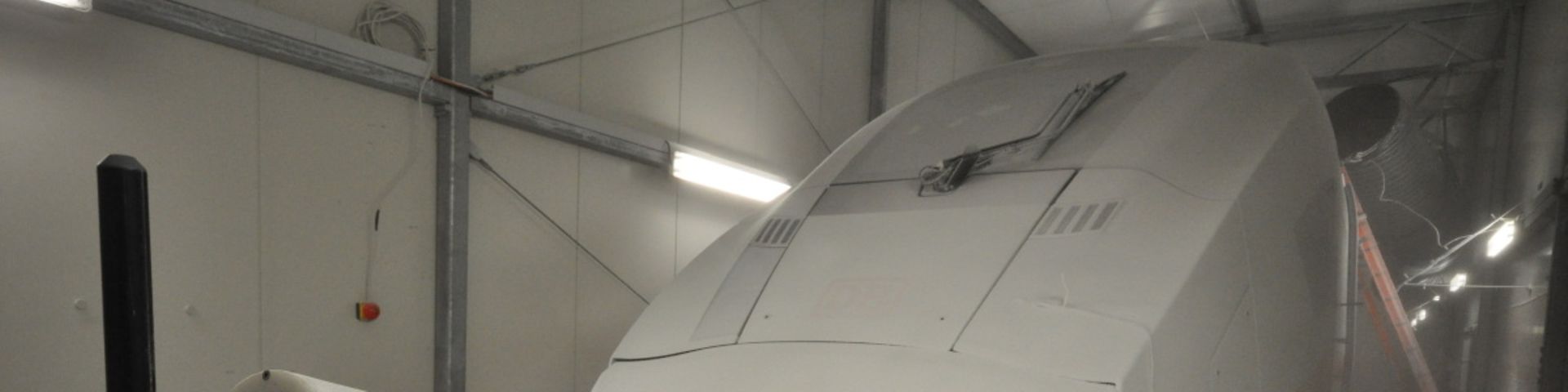
Article: Air conditioning test laboratory
For test and examination routines in the laboratory and on track, we are able to record almost any measured quantities that are relevant in an A/C or climate controlled context.
Accredited test procedures
- Our test laboratory in Minden is accredited by Deutsche Akkreditierungsstelle GmbH (DAkkS) in the area of climate testing analyses on rail vehicles in accordance with DIN EN ISO/IEC 17025 for several testing areas.
- The accreditation encompasses the relevant test procedures, e.g. in accordance with DIN EN 13129-2, EN 14750-2, EN 14813-2 and UIC 553-1. See the appendix for the accreditation certificate.
The detailed and latest list of activities/test procedures in the flexible scope of accreditation in the testing laboratory "Air conditioning" can be found in this PDF:
Our tests and test quantities
Details:
Mobile measurements during active operation:
- Measurement of the process variables pertaining to heating, ventilation, A/C and pressure protection equipment
- Trial testing with high-speed trains for measuring, verifying and assessing pressure comfort levels as well as CO₂ enrichment
- Trial testing for verifying air quality and thermal comfort levels
- Long-term data recording (e.g. operating conditions, fault response and energy consumption) using data loggers and remote access
Our stationary testing facilities
Climate chamber of DB Systemtechnik: MEIKE
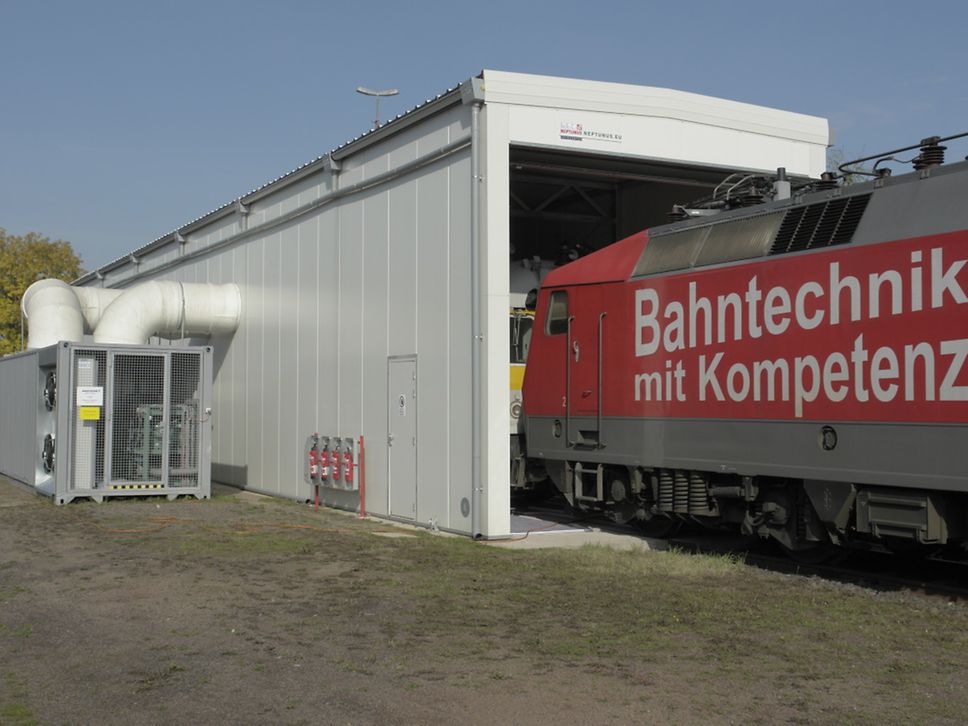
MEiKE - die Mindener Einrichtung für die klimatechnische Untersuchung an Eisenbahnfahrzeugen
| Location | Minden, Pionierstraße 10 |
|---|---|
| Operation | Stationary measurements |
| Use |
|
| Test conditions |
|
DIRK – A Real-World Test Environment for the Next Generation of Passenger Comfort and Climate Technologies
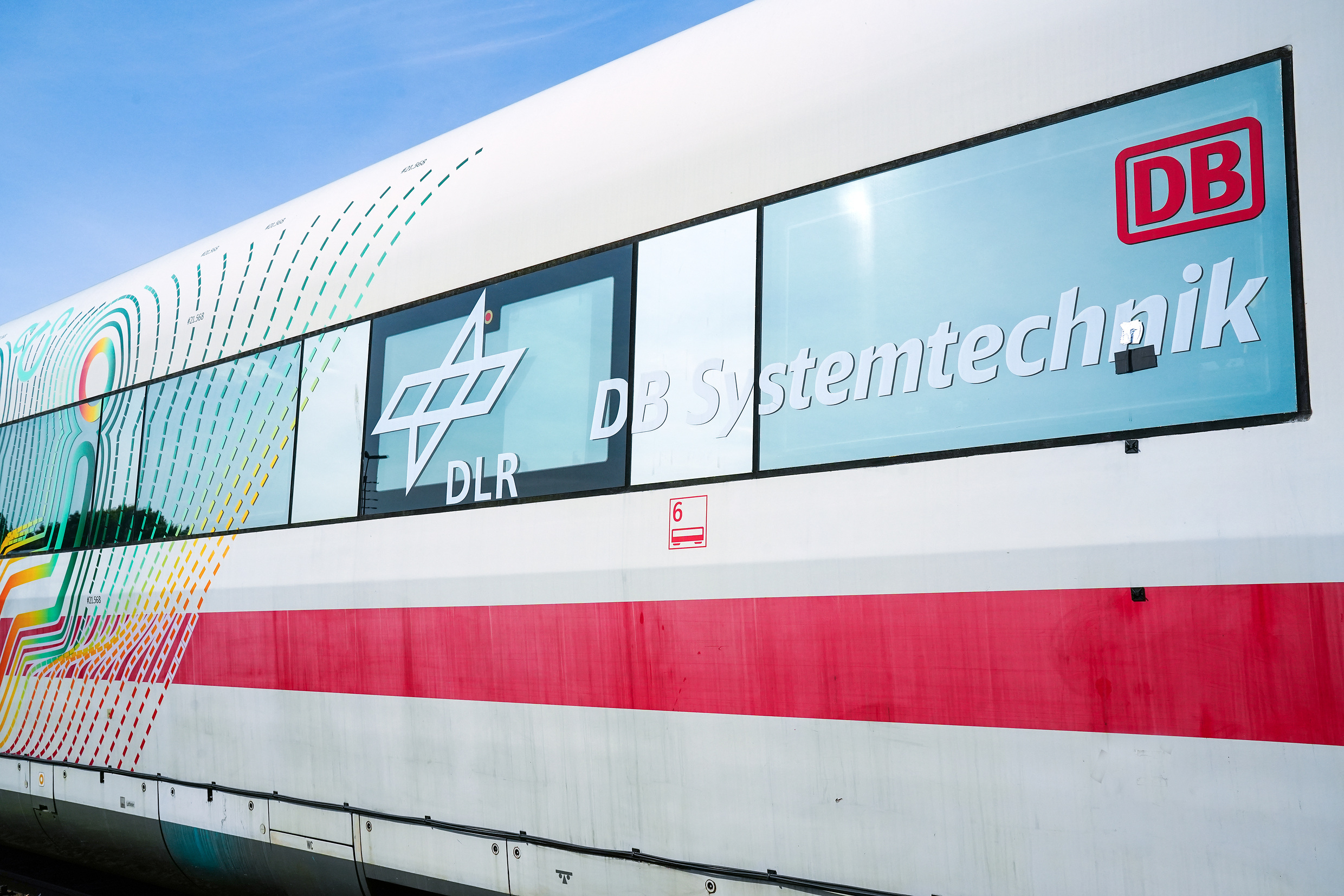
DIRK is an innovative test and demonstration platform where the next generation of passenger comfort and climate control technologies is brought to life. Based on a converted ICE coach, it provides a realistic environment for developing, testing, and validating solutions that make rail travel more comfortable, energy-efficient, and sustainable.
- A unique innovation platform for testing future passenger comfort and climate technologies under near real-world conditions.
- Jointly developed by DB Systemtechnik and the German Aerospace Center (DLR) to accelerate innovation in rail transport.
- Enables rapid validation of new solutions, including HVAC systems, air distribution concepts, seating technologies, and radiant heating.
- Advanced analytics and measurement capabilities provide deep insights into energy performance, air quality, thermal comfort, and passenger experience.
- Supports the development of more sustainable rail systems by reducing energy consumption while enhancing travel comfort.
- Bridges the gap between research and market application through efficient testing without disrupting railway operations.
 Go
Go