The condition of the tread is crucial for the smooth and safe operation of the wheelset, bogie, and vehicle. When measurements such as flange thickness, height, or roundness reach critical levels due to wear after high mileage, the wheel profile must be corrected.
At DB Regio’s Haltingen facility, this previously meant replacing the wheelsets or transferring the vehicles to other plants such as Freiburg or Ulm. This took time, tied up resources, and reduced the available fleet in service.
With rising vehicle numbers and growing pressure on availability, it became clear: The bottleneck lies not in the vehicle itself—but in the lack of on-site machining capabilities.
BILD
The answer is straightforward: wheelset machining must take place where the vehicles are. With the installation of an underfloor wheel lathe (URD), this is becoming a reality in Haltingen. The machine measures and machines wheelsets while they are still installed in the vehicle—precisely, efficiently, and without additional replacement and transport procedures or transfer movements. What sounds simple and logical fundamentally transforms the entire workshop process in practice. The path to this goal involved a challenging infrastructure project in which DB Systemtechnik took the lead in planning the facility.
In close collaboration with DB Regio, DB Systemtechnik has been supporting the project since 2022—with the goal of not only installing technology but also creating a functional, integrated solution. After all, an URD only realizes its full potential when it is seamlessly integrated into the infrastructure, processes, and systems, and its performance characteristics are tailored to local production requirements.
The path to the finished system begins long before it is first put into use.
Initially, the site was analyzed in detail, including via 3D scanning. Based on this analysis, the machine position, pit geometry, and all technical requirements were defined to ensure that the machine and its surroundings are optimally matched.
The request for proposals was not just about a single machine, but about the entire system. DB Systemtechnik developed the technical requirements, structured the evaluation process, and provided detailed support throughout the award decision.
An URD requires careful specification, configuration, and detailed integration into the production environment: the surrounding infrastructure, tow vehicle, crane system, utility connections, and the machine itself were developed into a coordinated system through the involvement of additional trades. Integration into IT systems—such as the data connection to the SAP system or the capability for remote maintenance—also had to be specified, with implementation supported and tested prior to commissioning.
BILD RECHTS
At the manufacturer’s facility, the system underwent comprehensive testing after production (known as a factory acceptance test). This was followed in Haltingen by assembly, commissioning, geometric inspection, and calibration, as well as a measurement uncertainty analysis. The subsequent trial operation will demonstrate whether the entire system is fully functional.
This is precisely where DB Systemtechnik closely supports the site and is now carrying out the corresponding acceptance tests and approvals.
BILD links
Technology alone is not enough. That is why the workshop staff was involved early on and received targeted training from DB Systemtechnik. Several operator training sessions ensure that the system can be used safely and efficiently from day one and that the turners have a solid foundation of knowledge to draw upon.
With the new URD, more than just a machine is being created in Haltingen. It is a new, integrated maintenance and production facility for one of the most important railway components, where lathe operators, the machine, and the surrounding infrastructure form a single system.
With the URD’s commissioning in 2026, the workshop’s capabilities will expand significantly. Wheelset machining will take place directly on site. Transfer movements will no longer be necessary, response times will decrease, and the workshop will become significantly more attractive and flexible. What was previously a bottleneck limiting fleet performance becomes a strength of the location.
BILD mittig
With the new URD, Haltingen is evolving into a high-performance and future-proof maintenance facility. DB Systemtechnik not only provided the expertise but also ensured that processes, systems, and people work together optimally, thereby helping to transform an operational bottleneck into a sustainable strength.
Additional services related to workshop systems, machines, and maintenance equipment can be found here: Workshop Systems, Machines, and Equipment.
The requirements for maintaining modern rail vehicles are continuously increasing, as is the need to provide technical personnel with targeted and consistent qualifications for new areas of responsibility. To address these challenges, DB Regio and DB Systemtechnik have jointly launched a comprehensive programme to develop and revise key qualification guidelines (Ril).
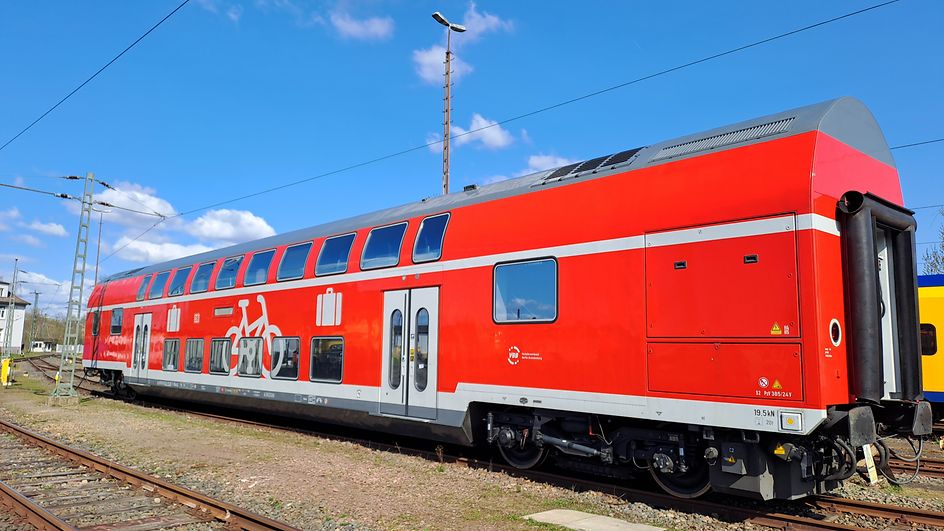
As part of the modernization of double-deck coaches of types 752.0 and 752.6 into the new type 752.8, the maximum design speed increased from 140 km/h to 160 km/h.
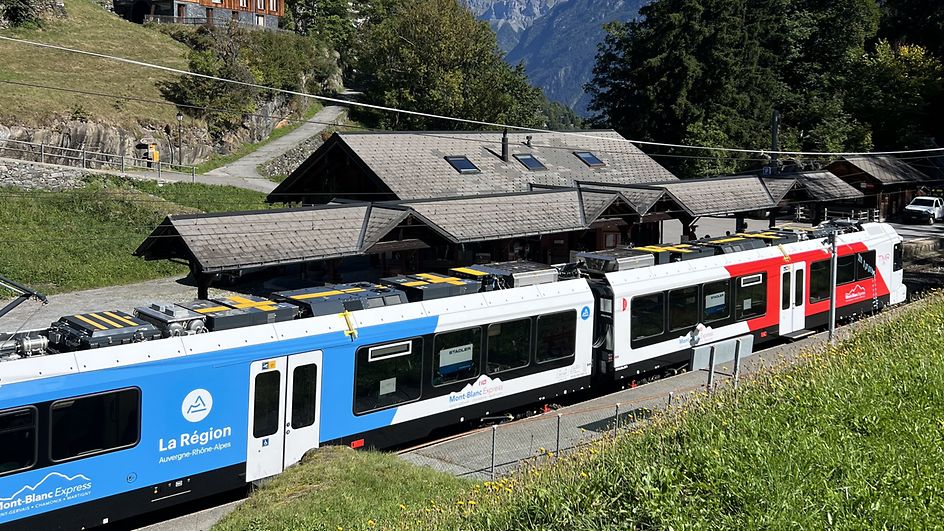
DB Systemtechnik tests the braking systems of the Mont Blanc Express under extreme conditions up to 90‰ gradients – forming the basis for approval in Switzerland and France.
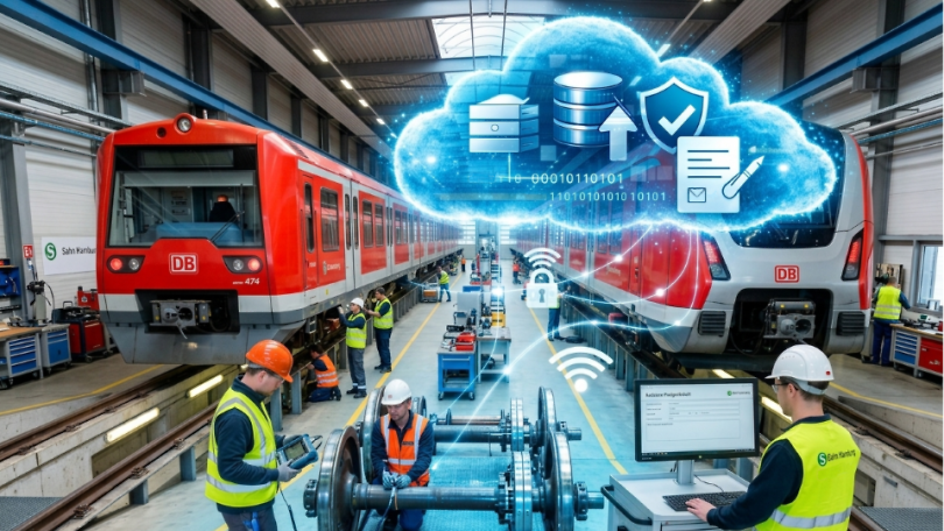
In many maintenance facilities within the rail industry, large volumes of inspection reports, approvals, and technical documentation are generated every day. These processes often have a long-standing history – and are still predominantly paper-based.
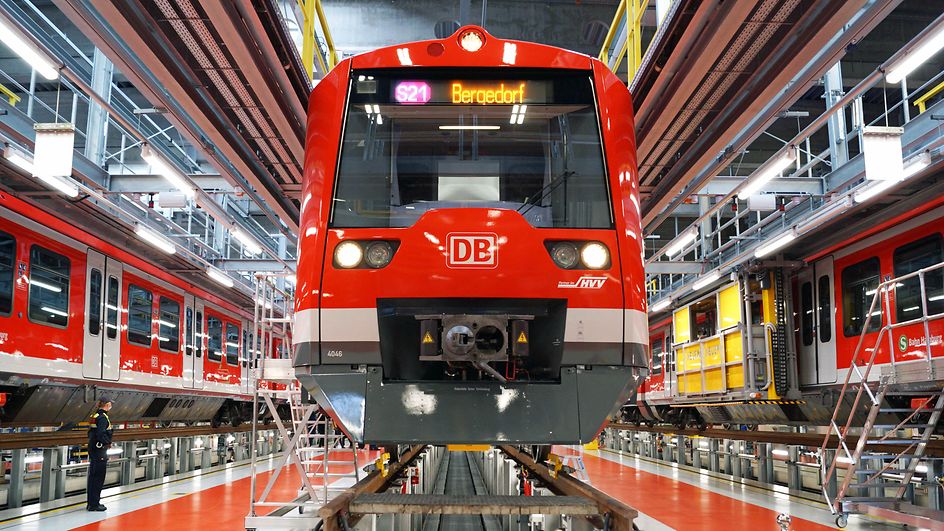
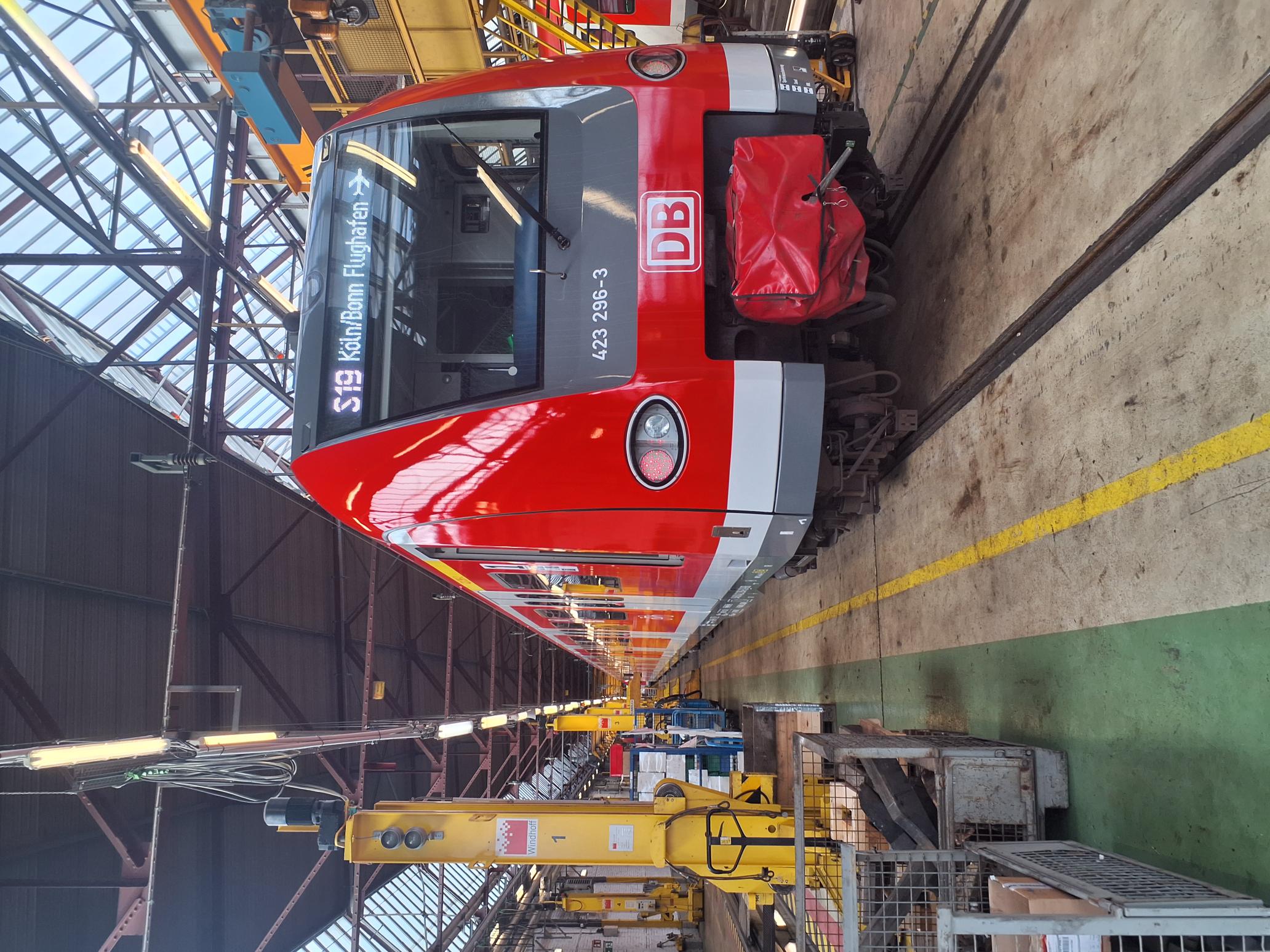
99 S-Bahn trains of the ET423 and ET422 series are being comprehensively modernized for the Rhineland S-Bahn network to bring technology, comfort, and passenger information up to the latest standards.
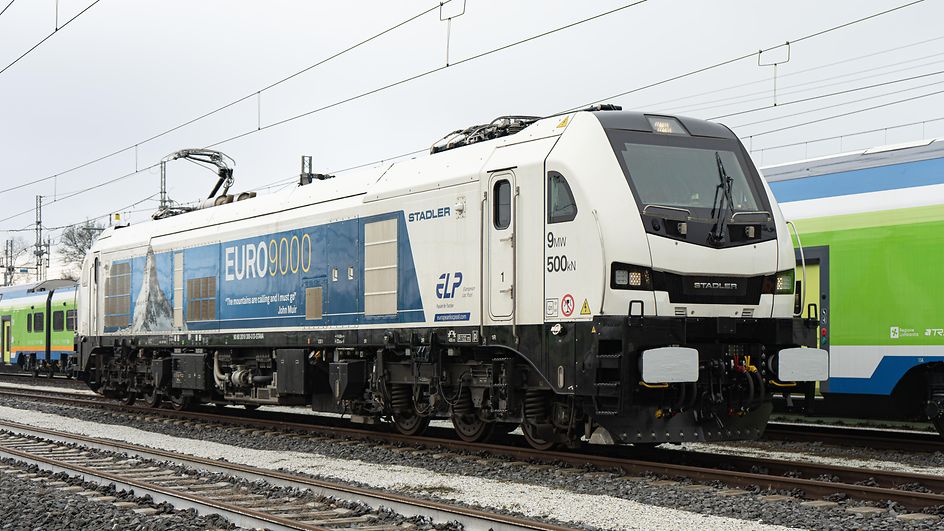
Cross-border teamwork: the EURO 9000 locomotive from Stadler receives homologation for operation in Italy at the end of December 2025. DB Systemtechnik provides support with a test campaign.
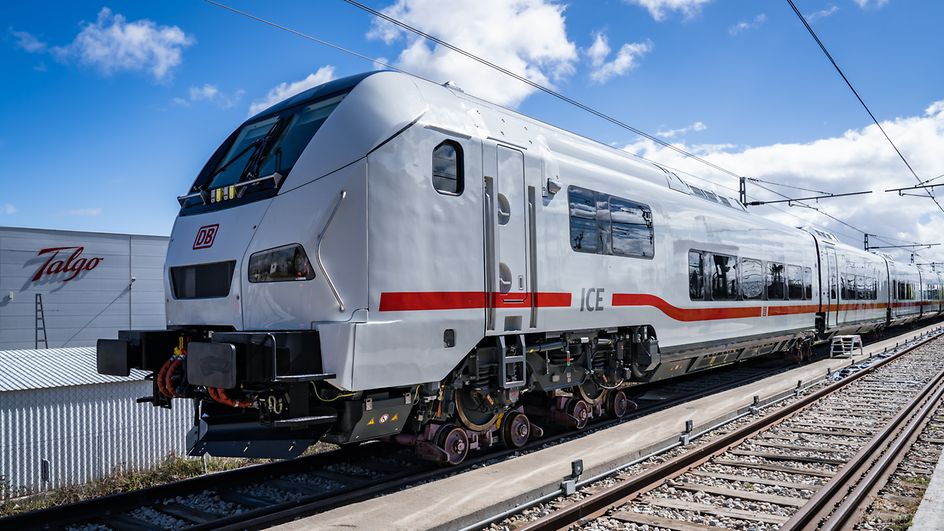
The ICE L is a new vehicle series for long-distance transportation - and with it comes specific technical requirements. To ensure that maintenance at the Berlin Rummelsburg plant runs smoothly in future, processes, systems and infrastructure have been systematically developed.
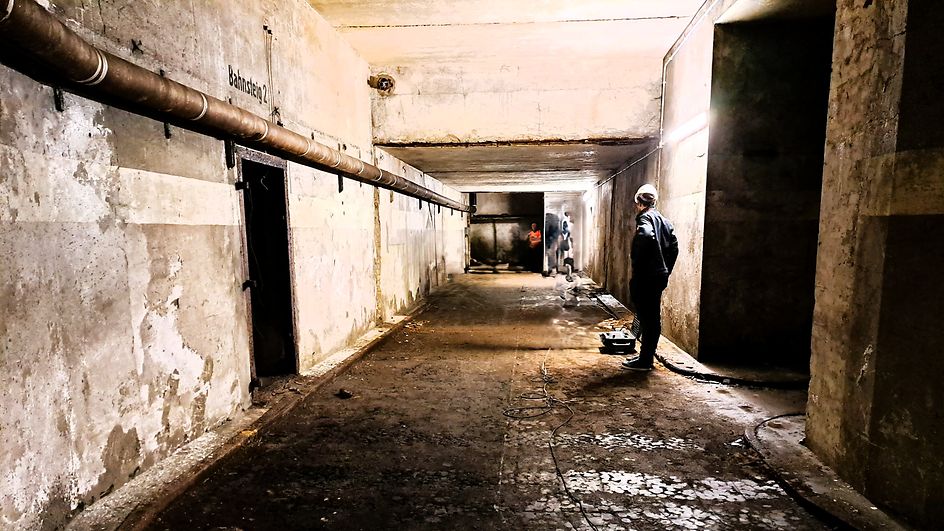
Thanks to LIDAR robotics, DB Systemtechnik was able to safely and precisely survey the hard-to-access underground areas of Hamm (Westf.) Central Station for the first time – an important step in the station’s modernization.
Noise in the workplace is a health risk – especially where alertness is crucial for personal safety.
DB Systemtechnik’s acoustics team has developed an innovative test method using the artificial head “Albert” to realistically evaluate active hearing protection systems – helping ensure effective noise protection and greater safety on the tracks.
Air conditioning systems are among the largest energy consumers in rail vehicles. Together with DB Systemtechnik, new ways were identified to significantly reduce energy consumption – while maintaining the same level of passenger comfort.
This milestone is the result of outstanding teamwork in a European context.
As stewards of these technical rules, we coordinate the development and updating of guidelines that affect all DB business units.
The HPK was originally developed by DB Systemtechnik in Minden and has been continuously developed and modernized in Kirchmöser ever since.
The growth of the Munich metropolitan region requires an expansion of public transport capacities. For the Munich S-Bahn, this means increased frequencies, the expansion of lines, and the increased use of longer trains.
Due to the European "F-Gas" regulation, the climate technology experts at DB Systemtechnik are working together with air conditioning manufacturers to test alternative refrigerants for future use in railway vehicle air conditioning systems.
The rail vehicle manufacturer Stadler developed a new locomotive platform called EURODUAL at its production facility in Valencia. The EURODUAL is based on the EURO-4000 diesel locomotive.
Activity Report 2023
Activity Report 2022
Activity Report 2021
Activity Report 2020
Acitivity Report 2019
Career opportunities, training and further education at DB Systemtechnik
Find out more about the company.
In these sectors we are active
This is how we realise challenging projects for our customers.
Would you like to be forwarded to ?


 Go
Go