
Article: Robotergestützte Radsatzprüfung - Beschaffungsbegleitung
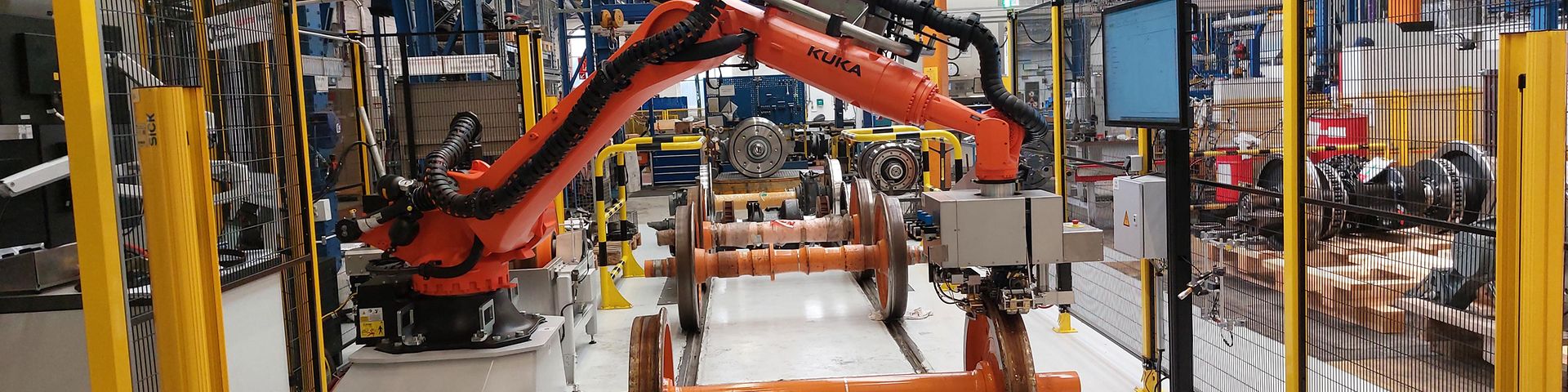
Wheels and wheel set axles on rail vehicles are regularly inspected for defects during maintenance. Ultrasonic testing is a form of non-destructive testing (NDT): It detects defects inside the material without damaging the component. For the modernization of the corresponding testing facilities in Paderborn, Wittenberge, and Kassel, DB Fahrzeuginstandhaltung relied on the technical expertise of DB Systemtechnik. In Wittenberge, a robot-assisted solution was developed that simplifies the testing process and offers advantages in spare parts supply.
Starting Point: Replacing Existing Testing Equipment
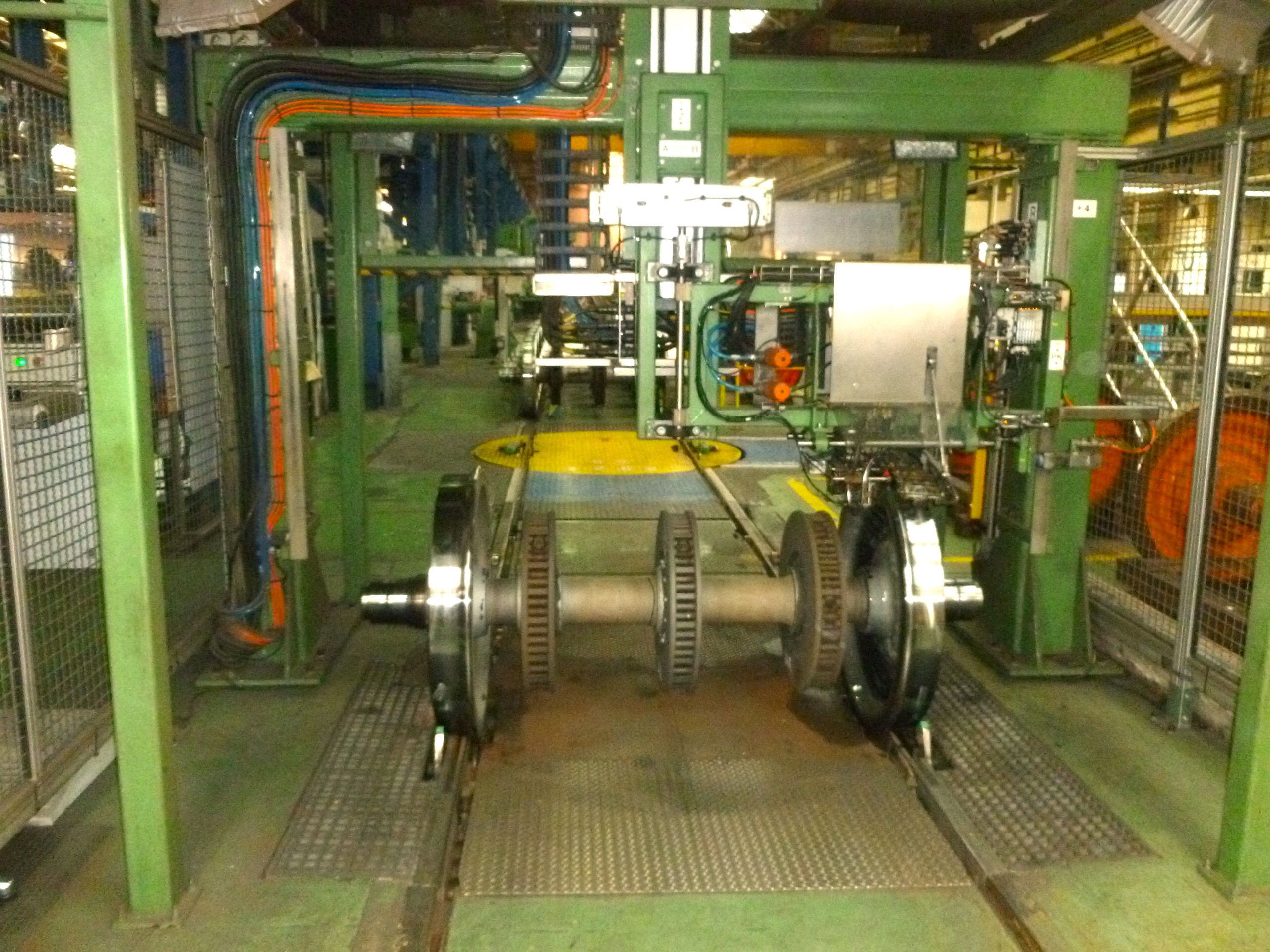
The existing specialized systems had been in use for about ten years. Their phased replacement was intended to ensure future system availability and the inspection of upgraded wheel sets. Various tasks had to be taken into account: In Kassel and Wittenberge, the focus was on inspecting railroad wheels for high-speed rail; in Paderborn, the focus was on wheels and solid axles of freight car wheel sets. These different areas of application required clear specifications for the new testing technology.
Among the requirements was that the new systems for ultrasonic testing of wheel sets had to achieve a cycle time of less than three minutes if no defects were detected. In addition, they had to be adaptable to new testing tasks and wheel set types. Even before submitting their bids, manufacturers were required to test a prototype in a dynamic laboratory test. The specification mandated at least 500 inspections on a wheel set with artificially introduced defects. The test was intended to demonstrate whether the transducers reliably transmit ultrasonic waves into the material even during repeated inspections.
From Requirements to the Right System
DB Systemtechnik supported the project from the functional specifications through the technical evaluation of bids to commissioning. The specifications were finalized in November 2022; the procurement process then began. For the technical evaluation, the bids were reviewed using an evaluation matrix, and any open questions were clarified in discussions with the bidders. By the end of 2023, the technical award recommendations for all three locations were available.
Thanks to its cross-location knowledge of the systems and its network of manufacturers and specialized departments, DB Systemtechnik identified an additional solution: A technical exchange during another commissioning project sparked the idea for a proposal incorporating robotics. This proposal was implemented in Wittenberge.
Wittenberge: Ultrasonic Testing with a Robotic Arm
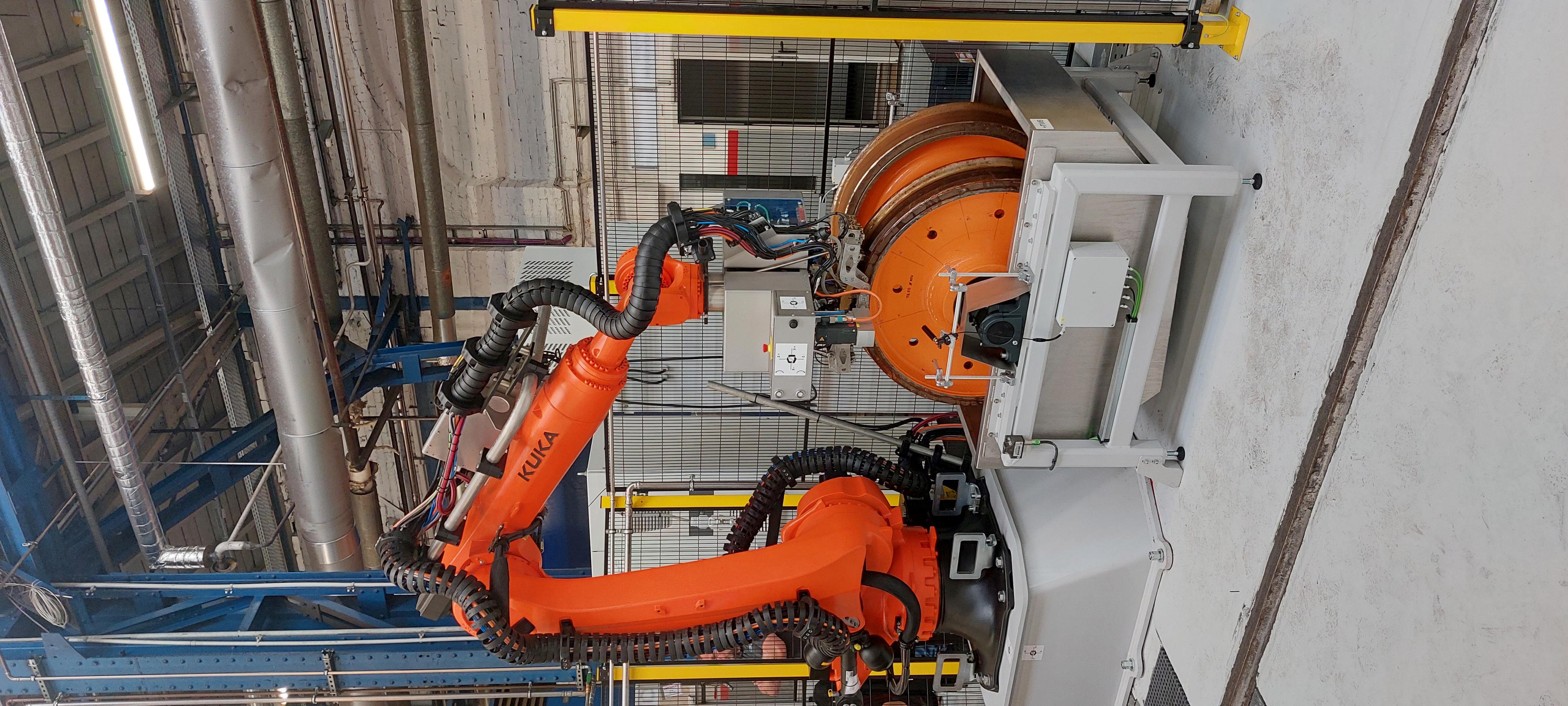
The old specialized system was replaced with a flexible robotic arm equipped with an ultrasonic testing probe. During the inspection, the removed and reconditioned wheel sets are guided along a track past the robotic arm. An overview of the advantages of the robotic solution:
- Faster Process: Before the start of each shift and after the end of each shift, the testing system is checked using a reference specimen in the form of a wheel set. This specimen is permanently positioned next to the track. Unlike with the previous system, it no longer needs to be rolled through the testing system for this purpose. This simplifies and speeds up the regular inspections of the testing system.
- Faster Repairs: Another advantage lies in the design: The solution uses a mass-produced industrial robot that is specialized for ultrasonic testing via the test head. Mass production makes it easier to procure replacement parts and replace the robot and its components compared to a custom-built system. This can reduce downtime during repairs.
- More Flexible Adaptation to Other Wheel Set Types: The robot arm can be adapted more flexibly to new or different wheel set types than previous custom-built systems. Through customized inspection and robot programs, the motion sequences can be tailored to different wheel set types.
A Future-Proof Wheel Set Inspection
The project demonstrates how expertise in ultrasonics and experience with machinery and plant engineering are intertwined: DB Systemtechnik combined the testing requirements with an eye toward operational processes and the plant’s future maintenance. This resulted in a technically evaluated basis for procurement for DB Fahrzeuginstandhaltung and, in Wittenberge, a robotic solution offering practical advantages in day-to-day testing and maintenance.
 Go