
Article: Brake Testing Under Extreme Conditions: DB Systemtechnik Supports Stadler on New Narrow-Gauge Trains for the Mont Blanc Express
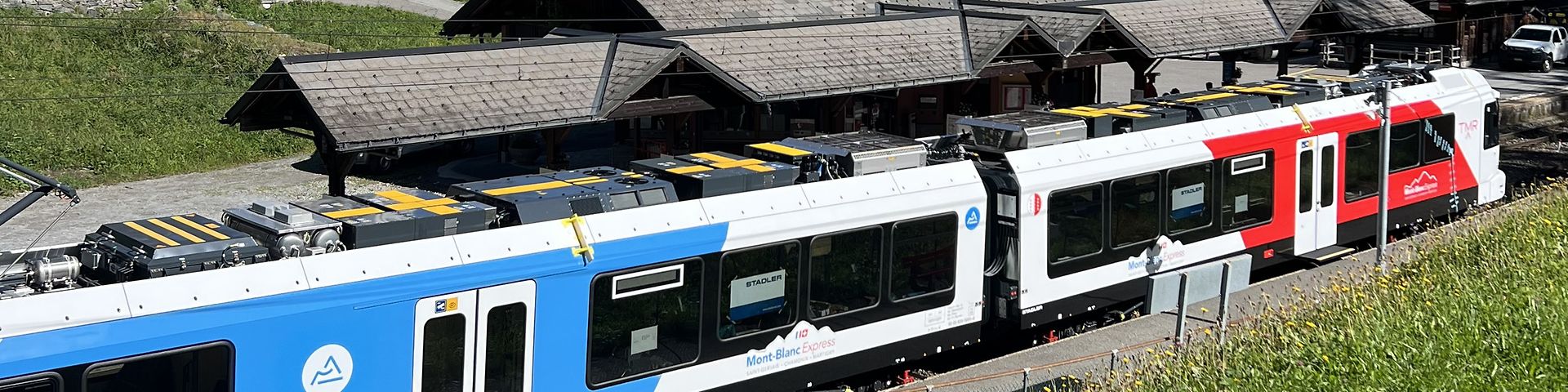
Advancing rail transport is not only about high-speed services – it also happens in highly specialized operating environments. A recent example is the new electric multiple units (EMU) of type Beh 4/8, developed by Stadler for operation on the metre-gauge line between Martigny (Switzerland) and Saint-Gervais-les-Bains (France).
Designed for combined adhesion and rack-and-pinion operation, these trains are scheduled to enter service as the Mont Blanc Express from mid-2026. The demanding topography, with gradients of up to 90‰, places particularly high requirements on vehicle performance – especially on braking systems.
Brake Testing as a Key Step Towards Approval
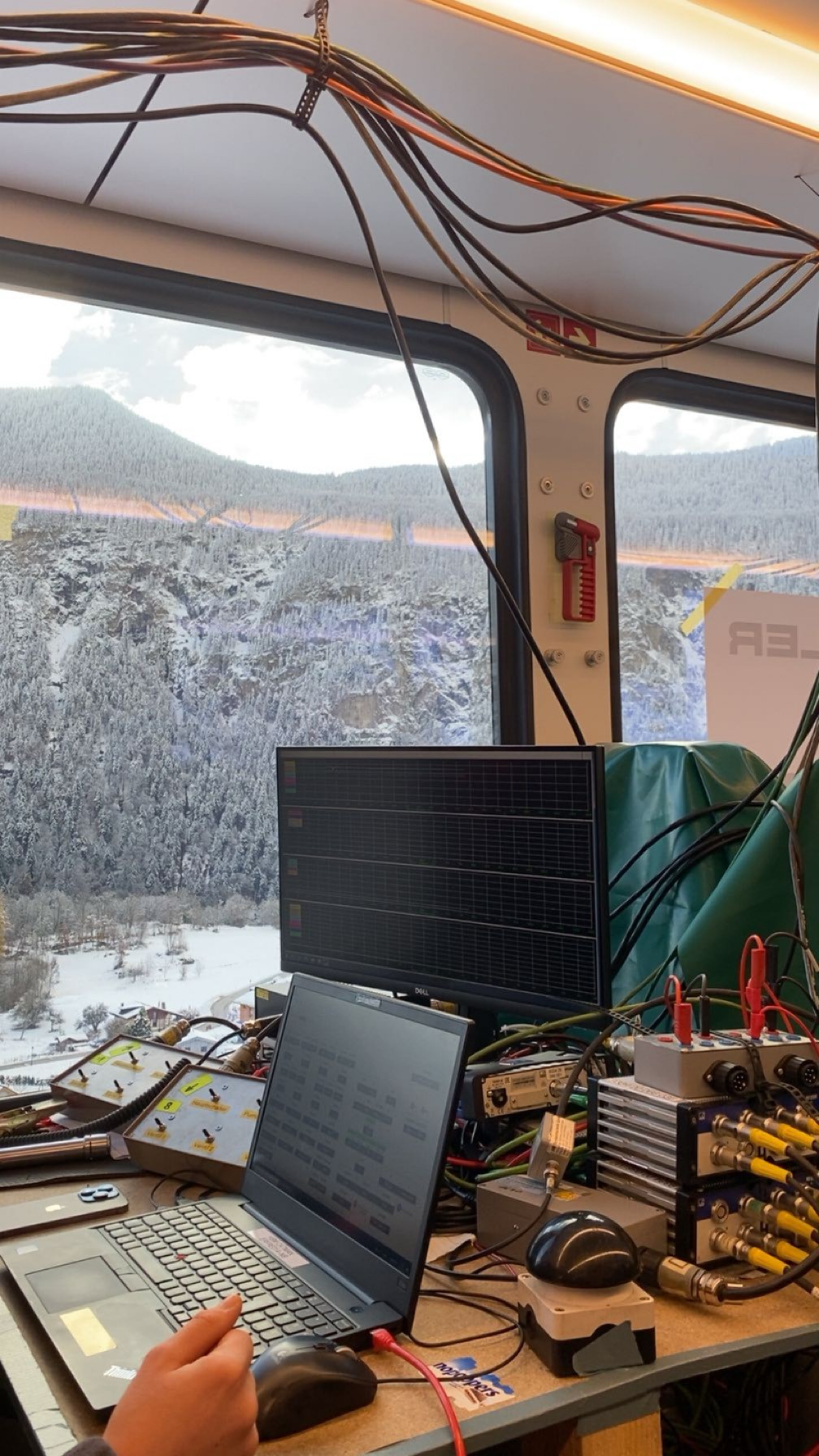
DB Systemtechnik was commissioned by Stadler to carry out comprehensive brake testing. The objective: to perform both static and dynamic brake tests under real operating conditions and to generate robust data for the approval processes in Switzerland and France.
The test campaign included extensive runs on relevant sections of the line, focusing on braking performance under challenging gradients and the interaction of the installed braking systems.
Testing Beyond Standard Conditions

The project presented several challenges.Brake testing of this scope on a narrow-gauge vehicle is not part of everyday operations. This was further compounded by the extreme gradients of up to 90‰, specific braking configurations – including tread brakes – and comparatively low initial braking speeds. These factors required an adapted testing approach and demonstrated that such projects cannot rely on standard procedures alone. Instead, they demand flexibility, experience, and close technical coordination.
Collaboration as a Key Success Factor
Close collaboration between all parties involved proved essential to the success of the campaign.DB Systemtechnik’s measurement team worked directly on-site alongside Stadler engineers and commissioning teams.
At the same time, the back-office team in Minden provided continuous support through data analysis, coordination, and real-time alignment. Ongoing information exchange between all stakeholders was a critical part of the overall delivery.
Successful Completion of the Test Campaign
The brake tests were completed successfully and on schedule.The resulting data forms the basis for the official assessment reports required for vehicle approval in both Switzerland and France.
With this project, DB Systemtechnik contributes to the safe and reliable introduction of new narrow-gauge rolling stock into cross-border operation.
 Go
Go