
Article: Technical Article: “Optical Detection of Insulated Rail Joints for Damage Analysis: Camera-Based Monitoring on Revenue-Service Vehicles”
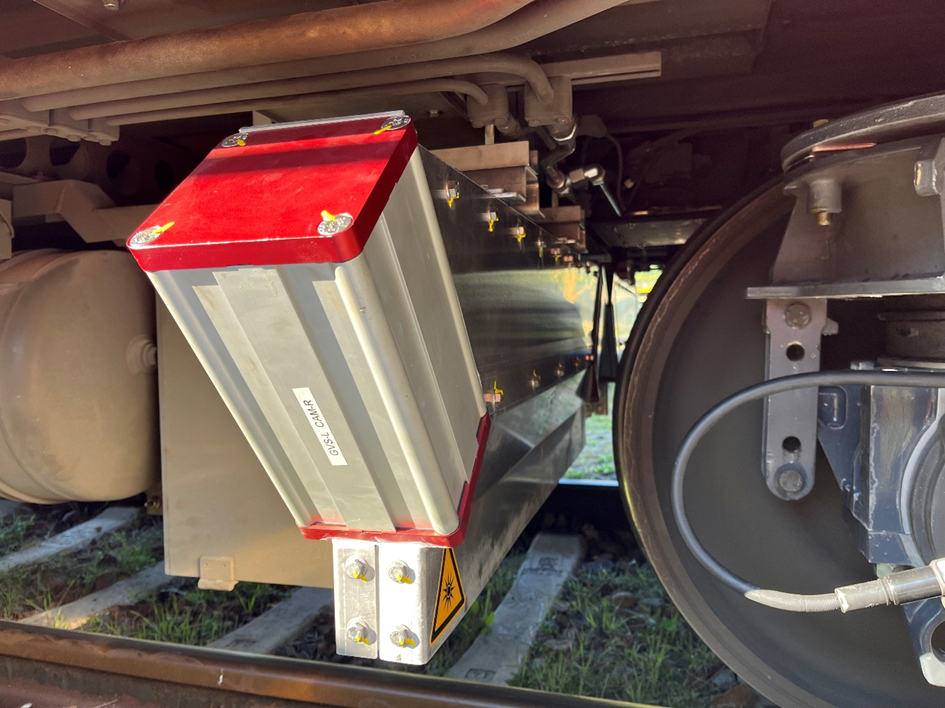
Monitoring infrastructure components from trains operating in regular service opens up new possibilities for condition-based and predictive maintenance. Together with DB InfraGO AG and S-Bahn Berlin GmbH, DB Systemtechnik GmbH has developed a video monitoring system and integrated it into a quarter-train of class 481/482.
The current focus is on insulated rail joints, which electrically separate track sections used for train detection while also being among the most heavily stressed components of the track structure. Until now, their condition has been assessed twice a year through visual inspections carried out by the infrastructure asset manager.
This established practice is now complemented by high-resolution, geo-referenced image data that is made directly available to the responsible asset manager. In combination with the existing Continuous Track Monitoring (CTM) system, unusual events can be detected and the relevant image sections automatically generated and provided. This allows potential defects within the rail network to be identified at an early stage without requiring dedicated measurement runs.
The system has a modular design and combines track cameras, environment cameras and an onboard computing and storage platform. Initial results from the Berlin S-Bahn network demonstrate that insulated rail joints, fastening elements and adjacent track structure components can be captured with a high level of detail.
In the future, automated evaluation methods and integration into infrastructure management systems will provide further support to infrastructure asset managers. The Berlin demonstrator therefore serves as a blueprint for deployment in additional applications, asset types and regions.
More background information and technical details are available in the full article published in
More background information and technical details are available in the full article published in EISENBAHNINGENIEUR,

 Go
Go